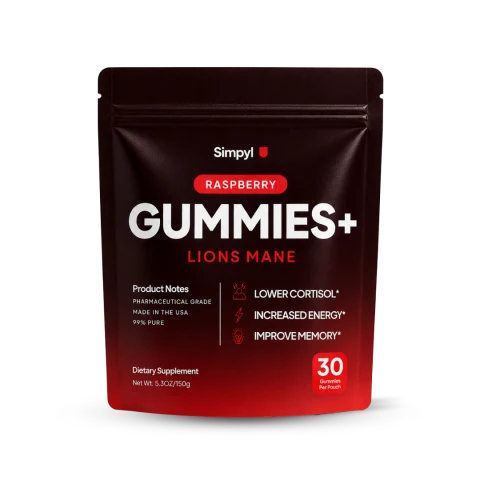
Lion's mane is best known for cognitive support, but a parallel line of research has examined its effects on mood. The findings are early but consistent enough to be worth understanding.
The 2010 Japanese clinical trial
The most cited study on lion's mane and mood is a 2010 randomized double-blind placebo-controlled trial published in Biomedical Research. Researchers gave 30 women either lion's mane biscuits or placebo biscuits daily for four weeks, then measured changes on standardized scales for anxiety, depression, sleep quality, and irritability.
The lion's mane group showed statistically significant improvements on the Center for Epidemiologic Studies Depression Scale (CES-D) and the Indefinite Complaints Index. Notable findings:
- Reduced subjective feelings of depression and irritability
- Reduced anxiety scores
- The benefits emerged within the four-week window
The study was small (30 participants) and limited to women. It's not the basis for confident treatment claims, but it's a meaningful signal worth following.
The proposed mechanism: BDNF
While nerve growth factor (NGF) gets most of the attention, another protein, brain-derived neurotrophic factor (BDNF), may explain the mood findings. BDNF is reduced in depression and elevated in response to many effective antidepressant treatments. Some animal research suggests lion's mane compounds increase BDNF expression in the hippocampus, a brain region central to both memory and mood regulation.
This is consistent with the time course observed in the human studies: mood effects don't appear immediately. They build over weeks as neurotrophic factor levels rise and downstream effects compound.
What this isn't
Lion's mane is not a substitute for evidence-based mental health treatment. Clinical depression and anxiety disorders require care from qualified professionals. The published research is suggestive of mild mood benefits in subclinical populations. It does not support replacing pharmacological or psychological treatment in clinical cases.
What's reasonable to expect from a quality lion's mane product, based on existing research:
- Modest improvements in subjective mood after 3–4 weeks of consistent daily use
- Reduced irritability and stress reactivity
- Possible improvement in sleep quality (an outcome measure in several studies)
- Effects compound with consistent use rather than appearing as acute boosts
Stacking considerations
Lion's mane works on different mechanisms than Methylene Blue: neurotrophic support versus mitochondrial support. Some users in our community report stacking both as part of a daily protocol. The mechanisms don't conflict.
Lion's mane does NOT have significant serotonergic effects, so it does not carry the same SSRI interaction concerns as Methylene Blue.
What to look for in a quality product
- Fruiting body extract rather than mycelium-on-grain. Fruiting bodies reliably contain hericenones; mycelium products often don't.
- Published hericenone or beta-glucan content on the COA, which verifies the active compounds are actually present.
- Standardized extracts rather than raw powders for consistent dosing.
Statements about our future products have not been evaluated by the FDA. This article is not medical advice. If you are experiencing symptoms of clinical depression or anxiety, please consult a qualified healthcare provider.
Sources
- Nagano M, Shimizu K, Kondo R, et al. (2010). Reduction of depression and anxiety by 4 weeks Hericium erinaceus intake. Biomedical Research, 31(4), 231–237.
- Chong PS, Fung ML, Wong KH, Lim LW. (2019). Therapeutic potential of Hericium erinaceus for depressive disorder. International Journal of Molecular Sciences, 21(1), 163.
- Vigna L, Morelli F, Agnelli GM, et al. (2019). Hericium erinaceus improves mood and sleep disorders in patients affected by overweight or obesity. Evidence-Based Complementary and Alternative Medicine, 2019, 7861297.
- Ryu S, Kim HG, Kim JY, et al. (2018). Hericium erinaceus extract reduces anxiety and depressive behaviors by promoting hippocampal neurogenesis in the adult mouse brain. Journal of Medicinal Food, 21(2), 174–180.