
The most commonly cited evidence for lion's mane and memory is a 2009 study published in Phytotherapy Research. It's worth looking at carefully because it's both the strongest piece of human evidence and a small, specific study that's often over-extrapolated.
The study design
Japanese researchers recruited 30 older adults (50–80 years old) with mild cognitive impairment, defined as scores on the Revised Hasegawa Dementia Scale (HDS-R) between 22 and 25 (mild but not normal). Participants were randomized to receive either:
- 250 mg lion's mane tablets, four times daily (1,000 mg total)
- Identical-looking placebo
Both groups took their assigned tablets for 16 weeks, with follow-up testing at weeks 8, 12, and 16, plus a follow-up 4 weeks after stopping treatment.
The results
At every measurement point during treatment (weeks 8, 12, and 16), the lion's mane group showed statistically significant improvements on the HDS-R compared to placebo. By week 16, the difference was most pronounced.
Then something notable happened: when participants stopped taking lion's mane, the cognitive scores decreased again. By the 4-week post-treatment follow-up, the benefits had partially regressed.
This pattern (improvement during use, decline after stopping) is consistent with the proposed mechanism. If lion's mane is supporting nerve growth factor production, then removing the support would gradually unwind the effect rather than producing a permanent rewiring.
What the study DID show
- Daily lion's mane improved cognitive function scores in adults with mild cognitive impairment over 16 weeks
- Benefits appeared at 8 weeks and continued to build through 16 weeks
- The effect was reversible. Consistent daily use is required to maintain benefits
- No significant adverse effects were reported in the lion's mane group
What the study did NOT show
- It did not test healthy adults. The population was specifically older adults with mild cognitive impairment
- It did not measure effects on healthy young adults' performance on focus tasks
- The sample size (30) is small. Larger studies would be needed to confirm the effect
- It did not establish dose-response curves. We don't know whether 500 mg or 2,000 mg would work better or worse
How to interpret this for daily use
If you're a healthy adult under 50 hoping for an acute focus boost, this study doesn't speak to your situation directly. The mechanism (NGF support) is plausible across populations, but the cognitive improvements were measured in a specific clinical population over a sustained timeframe.
What's reasonable to take from the broader body of research, including this study and the work on nerve growth factor and mood support:
- Lion's mane appears to support neurotrophic factor production with consistent daily use
- Effects build over weeks rather than appearing as acute boosts
- Benefits are use-dependent. They fade when supplementation stops
- Sourcing quality matters as much as dosage
What we're building toward
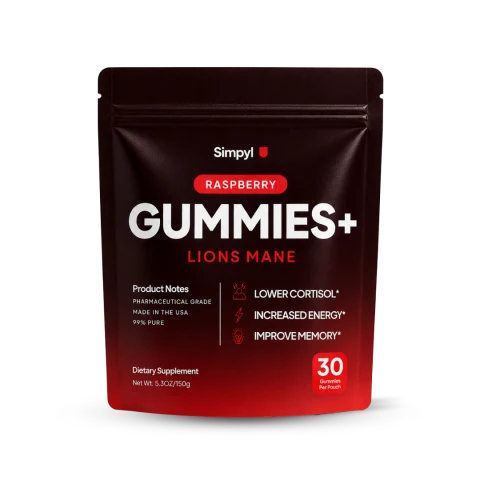
Our lion's mane gummies (coming soon) will use fruiting body extract with published hericenone content per batch. The 2009 study used 1,000 mg/day of unstandardized tablets, but extract concentration varies dramatically. We'll dose based on active compound content rather than raw extract weight, and publish the assay on every COA.
This article is not medical advice and does not suggest lion's mane treats or prevents any disease. Statements about our future products have not been evaluated by the FDA.
Sources
- Mori K, Inatomi S, Ouchi K, et al. (2009). Improving effects of the mushroom Yamabushitake (Hericium erinaceus) on mild cognitive impairment: a double-blind placebo-controlled clinical trial. Phytotherapy Research, 23(3), 367–372.
- Saitsu Y, Nishide A, Kikushima K, et al. (2019). Improvement of cognitive functions by oral intake of Hericium erinaceus. Biomedical Research, 40(4), 125–131.
- Li IC, Chang HH, Lin CH, et al. (2020). Prevention of early Alzheimer's disease by erinacine A-enriched Hericium erinaceus mycelia pilot double-blind placebo-controlled study. Frontiers in Aging Neuroscience, 12, 155.
- Phan CW, David P, Naidu M, et al. (2015). Therapeutic potential of culinary-medicinal mushrooms for the management of neurodegenerative diseases. Critical Reviews in Biotechnology, 35(3), 355–368.
- Friedman M. (2015). Chemistry, nutrition, and health-promoting properties of Hericium erinaceus (Lion's Mane) mushroom fruiting bodies and mycelia and their bioactive compounds. Journal of Agricultural and Food Chemistry, 63(32), 7108–7123.