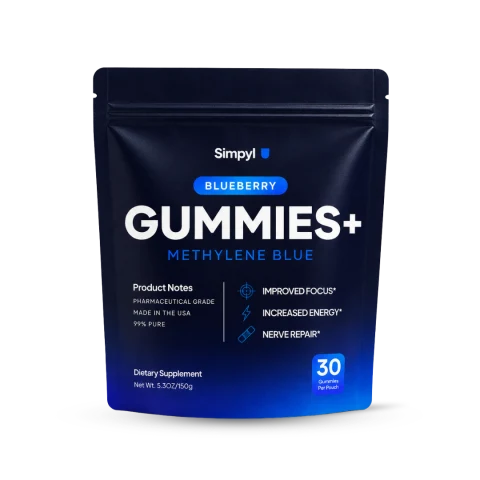


Methylene Blue's relationship with cognition has been studied across rodent and human populations for over two decades. While the research is far from settled, several specific findings have shaped its reputation as a cognitive support tool.
What the research consistently finds
The most replicated finding in published Methylene Blue research is improved performance on memory consolidation tasks at low doses. In rodent studies, Methylene Blue administered around the time of learning enhances retention measured days later. This finding is documented in multiple peer-reviewed papers since the early 2000s.
Human research is more limited but follows the same direction. A 2016 fMRI study at the University of Texas Health Science Center found that a single dose of Methylene Blue (280 mg, well above our daily dose) increased activity in brain regions associated with short-term memory and attention. Participants performed better on memory retrieval tasks than placebo.
The mechanism: why memory specifically?
Memory formation is energy-intensive. Encoding new information requires sustained ATP production in the hippocampus and prefrontal cortex. By supporting mitochondrial function, Methylene Blue may make this energetically demanding process more efficient, which is the working hypothesis behind the cognitive findings.
Methylene Blue also has effects on tau and amyloid clearance pathways (the proteins implicated in Alzheimer's-type cognitive decline), but those effects are still under active research and shouldn't be overstated.
What our daily dose targets
Our Methylene Blue gummies deliver 5mg per serving. This is intentionally lower than the doses used in single-administration cognitive studies (which often use 0.5–4 mg/kg, equating to 35–280 mg for a 70 kg adult). The reasoning:
- Daily use compounds. Mitochondrial support is most pronounced with consistent dosing over weeks, not single large doses.
- Lower doses stay well below the pro-oxidant threshold. 5mg is comfortably in the supportive electron-donor range with virtually no risk of the dose-flip described in the mitochondria article.
- Cognitive effects in users at this dose are subjective. Sustained focus across the workday, fewer afternoon crashes, less mental fog. These match what mitochondrial-support research predicts.
What's still being studied
Methylene Blue's effects on:
- Long-term cognitive decline (active research, no definitive conclusion).
- Mood (some signal in early studies, but limited).
- Reaction time and processing speed (mixed results, typically benefits the rested but not the fatigued).
What's clear: Methylene Blue is not a stimulant, not a band-aid for poor sleep, and not a substitute for the basics. It works by supporting cellular machinery, which means it's most useful as part of a daily protocol rather than a one-off boost.
How to take it
Most users see the best results from morning dosing on an empty stomach, paired with a protein-forward breakfast 15–30 minutes later. Consistent daily use for 2–3 weeks before evaluating effects is recommended. Mitochondrial adaptation is not instant.
This article describes published research and personal-use patterns. It is not medical advice. Statements about our product have not been evaluated by the FDA.
Sources
- Rodriguez P, Zhou W, Barrett DW, et al. (2016). Multimodal randomized functional MR imaging of the effects of Methylene Blue in the human brain. Radiology, 281(2), 516–526.
- Telch MJ, Bruchey AK, Rosenfield D, et al. (2014). Effects of post-session administration of Methylene Blue on fear extinction and contextual memory in adults with claustrophobia. American Journal of Psychiatry, 171(10), 1091–1098.
- Rojas JC, Bruchey AK, Gonzalez-Lima F. (2012). Neurometabolic mechanisms for memory enhancement and neuroprotection of Methylene Blue. Progress in Neurobiology, 96(1), 32–45.
- Bruchey AK, Gonzalez-Lima F. (2008). Behavioral, physiological and biochemical hormetic responses to the autoxidizable dye Methylene Blue. American Journal of Pharmacology and Toxicology, 3(1), 72–79.
- Gonzalez-Lima F, Barksdale BR, Rojas JC. (2014). Mitochondrial respiration as a target for neuroprotection and cognitive enhancement. Biochemical Pharmacology, 88(4), 584–593.