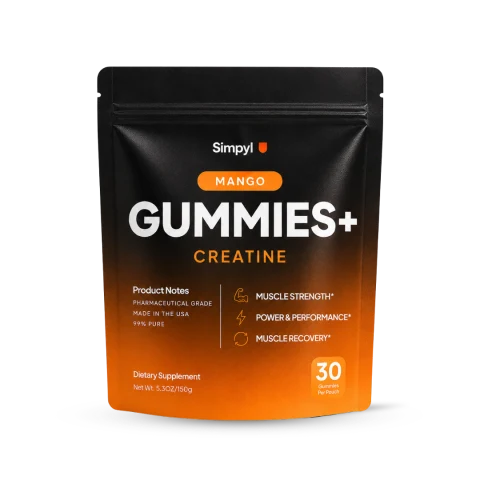
To understand creatine's effects on both physical and cognitive performance, it helps to understand what creatine actually does at the cellular level. The biochemistry is well-established and explains why benefits show up across so many different domains.
The three energy systems
The body has three primary systems for generating ATP, the universal energy currency that powers cellular work:
- Phosphocreatine (immediate). Provides energy for the first 5–15 seconds of intense activity. Fastest, smallest capacity.
- Glycolysis (short-term). Breaks down glucose anaerobically. Powers efforts from ~15 seconds to ~2 minutes. Produces lactate as a byproduct.
- Oxidative phosphorylation (long-term). Uses oxygen and the electron transport chain to extract energy from carbs and fats. Slowest to ramp up, largest capacity.
What the phosphocreatine system does
Phosphocreatine is stored creatine that has a high-energy phosphate group attached. When a cell rapidly needs ATP (for muscle contraction, neuronal firing, or any high-burst demand), phosphocreatine can donate its phosphate directly to ADP, regenerating ATP almost instantly.
The reaction is:
Phosphocreatine + ADP → Creatine + ATP
This happens in microseconds. It's why a sprinter can produce massive power for the first few seconds before glycolysis takes over.
Why it matters for the brain
The brain doesn't sprint, but it does have moments of extremely high local energy demand. Neuronal firing during cognitive work is rapid, episodic, and energetically expensive. Synapses use ATP to clear neurotransmitters, repackage them, and ready themselves for the next signal.
The phosphocreatine system in neurons functions as a rapid-response energy buffer. When firing is intense (during demanding cognitive work, under stress, or after sleep loss), the buffer drops. Refilling that buffer is what dietary or supplemental creatine does.
How much creatine does the body need?
The average omnivorous adult body holds about 120 grams of creatine total, with roughly:
- 95% in skeletal muscle
- 5% in the brain, heart, and other tissues
The body loses about 1–2 g of creatine daily through normal turnover. This loss is replaced by:
- Dietary intake (typical omnivores: ~1 g/day from meat and fish)
- Endogenous synthesis (~1 g/day produced in the liver and kidneys from amino acids)
Most people sit at about 60–80% of theoretical saturation. Supplementation closes that gap, which is why effects are often most pronounced in vegetarians and vegans (who have lower dietary intake) and in people pushing themselves cognitively or physically (who burn through the buffer faster).
What saturation actually means
When you supplement creatine consistently, your muscle and brain creatine stores rise to a higher set point, typically over 2–4 weeks of daily use. This higher set point is what produces sustained benefits:
- More phosphocreatine on hand for rapid ATP regeneration
- Larger reservoir for high-demand moments
- Faster recovery between repeated bursts of effort
Skip a day and the stores barely drop. Skip a few weeks and they slowly drift back toward baseline. This is why creatine is a daily-use compound rather than a pre-workout supplement.
What it isn't
Creatine is not an anabolic, a hormone, a stimulant, or a fat burner. It's a substrate that participates in rapid ATP regeneration. The dramatic-sounding "muscle building" effects of creatine are mostly indirect: more available energy → more total work → more growth signal.
The cognitive effects work the same way: more available energy → more sustained cognitive output, particularly under stress.
This article describes well-established biochemistry. It is not medical advice. Statements about our future products have not been evaluated by the FDA.
Sources
- Wallimann T, Tokarska-Schlattner M, Schlattner U. (2011). The creatine kinase system and pleiotropic effects of creatine. Amino Acids, 40(5), 1271–1296.
- Wyss M, Kaddurah-Daouk R. (2000). Creatine and creatinine metabolism. Physiological Reviews, 80(3), 1107–1213.
- Brosnan JT, Brosnan ME. (2007). Creatine: endogenous metabolite, dietary, and therapeutic supplement. Annual Review of Nutrition, 27, 241–261.
- Kreider RB, Kalman DS, Antonio J, et al. (2017). International Society of Sports Nutrition position stand: safety and efficacy of creatine supplementation in exercise, sport, and medicine. Journal of the International Society of Sports Nutrition, 14, 18.
- Bonilla DA, Kreider RB, Stout JR, et al. (2021). Metabolic basis of creatine in health and disease: a bioinformatics-assisted review. Nutrients, 13(4), 1238.